
Originally published: 2022
Last updated: July 2026
Does it really matter which baby oil you choose? When you’re standing in the baby aisle comparing a low-cost bottle of traditional baby oil with a plant-based massage oil, it’s easy to wonder whether the difference is mostly marketing. It isn’t quite that simple.
Traditional baby oil is usually mineral-oil based and works mainly by forming a barrier over the skin. Plant-based baby oils use botanical oils that can soften the skin and naturally contain different fatty acids and other components, depending on the formula.
Neither option should be judged by one ingredient alone. The full ingredient list, your reason for using it and how your baby’s delicate skin responds all matter.
Traditional baby oil commonly contains mineral oil and fragrance. Mineral oil is an occlusive ingredient, which means it helps slow moisture loss by forming a layer on the skin.
Plant-based baby oils use botanical oils that tend to feel and absorb differently and may naturally contain fatty acids, vitamin E and other plant-derived components. For baby massage, the best choice is a clearly labelled formula that provides enough glide, suits your baby’s skin and is used as directed.
Traditional Baby Oil vs Plant-Based Baby Oil
| What to compare | Traditional baby oil | Plant-based baby oil |
|---|---|---|
| Typical base | Mineral oil | Botanical oils such as safflower, jojoba or sunflower |
| How it feels | Often sits more noticeably on the skin | Texture and absorption vary by the oils used |
| Main role | Helps reduce moisture loss by forming an occlusive layer | Provides slip for massage and helps soften the skin |
| Ingredient profile | Often a short formula and may include fragrance | May combine several plant oils, botanical extracts and essential oils |
| Price | Usually more affordable | Often costs more because the formula contains multiple oils and extracts |
What Is Traditional Baby Oil Made From?
Many traditional baby oils have a very short ingredient list:
- Mineral oil
- Fragrance or parfum
Mineral oil is a highly refined, colourless and odourless oil derived from petroleum. You may also see related terms such as liquid paraffin or white mineral oil on cosmetic ingredient lists. It is widely used because it is stable, affordable and effective at creating an occlusive layer over the skin.
“Occlusive” simply means that the ingredient helps slow water loss from the skin. Rather than sinking in like water, it forms a surface layer that helps hold onto moisture already present. This is why oils are often applied after a bath, while the skin is still slightly damp.
Is Mineral Oil Bad for a Baby’s Skin?
Mineral oil is not automatically a “bad” ingredient. It has a long history of cosmetic use and can be useful when the goal is to reduce moisture loss. The more helpful question is whether the complete product suits what you want from a baby oil.
- Choose a mineral-oil formula if you want a simple, affordable oil that primarily creates a protective layer.
- Consider a plant-based formula if you prefer botanical ingredients, a different skin feel or a massage oil with several purposeful oils and extracts.
- Whatever the base, check the complete ingredient list and stop using the product if irritation occurs.
How Are Plant-Based Baby Oils Different?
Plant-based baby oils replace mineral oil with oils pressed or extracted from botanical sources. Depending on the formula, these may include safflower, sunflower, jojoba, apricot kernel, grapeseed, borage seed, rosehip or evening primrose oil.
The biggest difference is not that every plant oil is automatically better. Each plant oil has its own texture and fatty-acid profile, allowing a formulator to blend oils for glide, skin feel and everyday nourishment. Plant oils may also naturally contain components such as vitamin E, although the amount and benefit depend on the actual formula.
A long list of fashionable botanicals does not necessarily make a formula more effective. Ingredients should be included at purposeful levels and work together as a complete product.
What About Fragrance in Baby Oil?
“Fragrance” or “parfum” is an umbrella labelling term, so it does not tell you everything about the scent blend by itself. A formula may use synthetic fragrance ingredients, naturally derived fragrance ingredients or a combination, depending on the product and applicable labelling requirements.
Essential oils are different from an unspecified fragrance blend, but “natural” does not mean irritation is impossible. Essential oils are concentrated and should be used at appropriate levels in a finished formulation rather than applied neat to a baby’s skin.
Parents who prefer to avoid scent altogether should look for a genuinely fragrance-free product, not simply an unscented one.
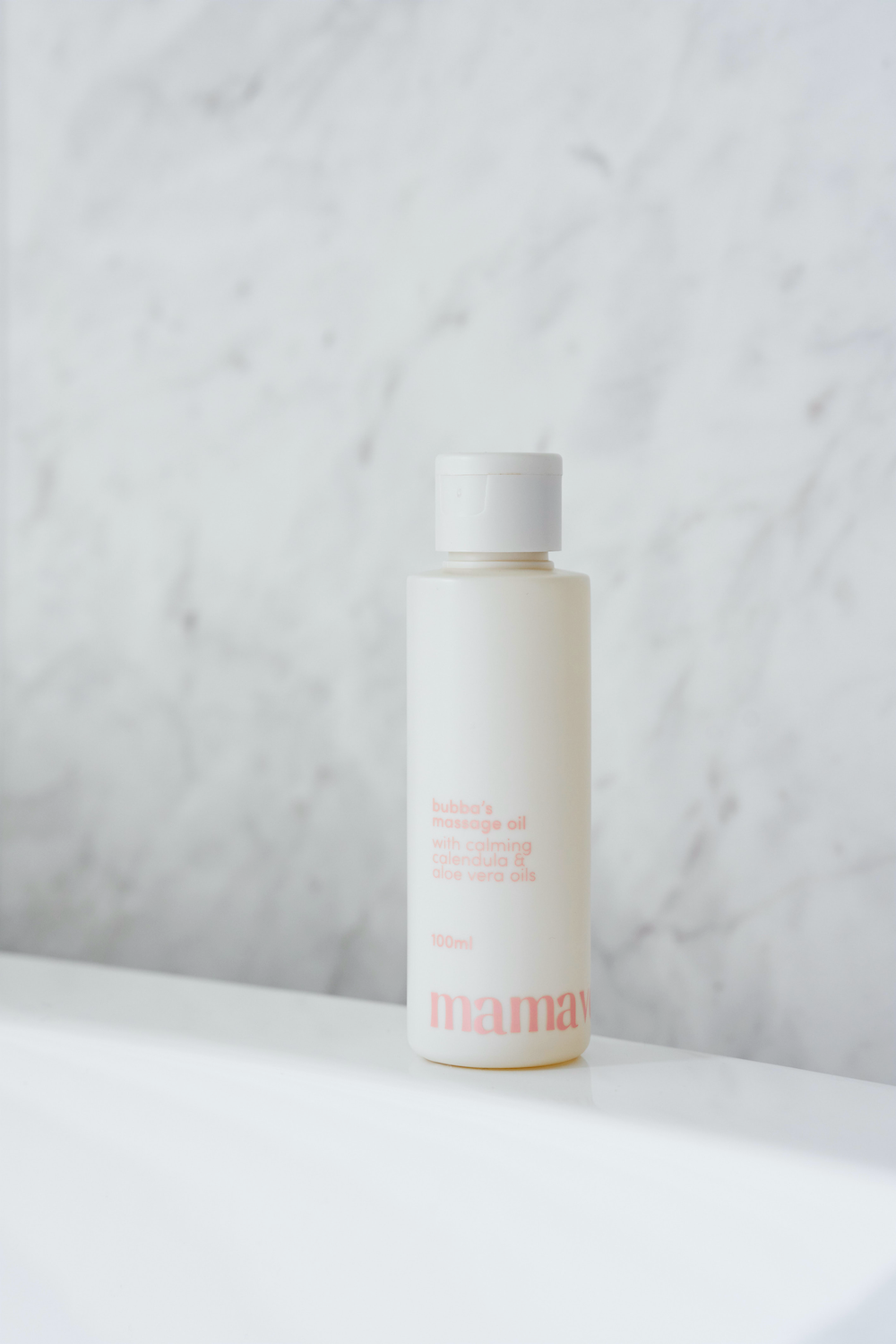
Mamave lists the essential oils used in its formulas rather than describing them only as “fragrance”. Bubba’s Massage Oil contains lavender and ylang ylang essential oils, which provide a light scent within the finished formulation.
Does It Matter Which Oil You Use for Baby Massage?
Yes, but not because there is one universally perfect oil. Parents commonly want to know whether the oil will feel greasy, whether it gives enough glide, what is creating the scent and whether the ingredients are clearly disclosed.
For baby massage, look for:
- A formula designed for use on babies, with clear directions and age guidance
- Enough slip for gentle massage without constant reapplication
- An ingredient list you understand and feel comfortable using
- A scent level that suits your family, including fragrance-free where preferred
- A small patch test before broader use, especially when trying a new product
Where Mamave Bubba’s Massage Oil Fits
Mamave Bubba’s Massage Oil is a plant-based option formulated for everyday baby massage and skin nourishment. Its blend includes safflower, apricot kernel, grapeseed, sunflower, jojoba, borage seed, rosehip, olive and evening primrose oils, along with natural vitamin E, aloe vera and calendula extract.
The formula is designed to offer comfortable glide while bringing together botanical oils and extracts chosen for a reason - not simply to make the ingredient list look impressive.
It contains a light blend of lavender and ylang ylang essential oils, so it may not be the right choice for families specifically seeking a completely fragrance-free massage oil.
Explore Mamave Bubba’s Massage Oil for the full ingredient list and current directions for use.
A Few Things to Keep in Mind
- Traditional mineral-oil products are usually cheaper and may suit families who want a simple occlusive oil.
- Plant-based oils can cost more because they often combine several botanical ingredients.
- Plant-based does not automatically mean fragrance-free or suitable for every baby.
- A complex ingredient list is not automatically better; thoughtful formulation matters more than ingredient count.
- Any new skincare product can disagree with an individual baby’s skin, so introduce products carefully.
Which Baby Oil Should You Choose?
Choose based on the job you need the product to do. A traditional mineral-oil formula may be enough when your priority is a low-cost oil that helps reduce moisture loss. A well-formulated plant-based oil may be a better fit when you want botanical ingredients, a particular massage feel and full visibility of the oils and extracts in the formula.
The label matters more than the marketing category. Read the complete ingredient list, check whether the product contains fragrance or essential oils, follow its age and use directions, and pay attention to how your baby’s delicate skin responds.
Frequently Asked Questions
What is traditional baby oil made from?
Traditional baby oil is commonly made from mineral oil and fragrance, although formulas vary. Always check the ingredient list on the individual product.
Is mineral oil the same as baby oil?
Mineral oil is often the main ingredient in traditional baby oil, but “baby oil” describes the finished product rather than one specific ingredient.
Is plant-based baby oil better than mineral oil?
Not automatically. Mineral oil is effective at forming an occlusive layer, while plant-based oils offer different textures and ingredient profiles. The better choice depends on the complete formula, your preferences and how your baby’s skin responds.
Can I use baby oil for baby massage?
Use a product specifically labelled and directed for baby massage. Follow the manufacturer’s age guidance, warm a small amount between your hands and use gentle movements.
Should baby massage oil be fragrance-free?
Fragrance-free may suit families who prefer to minimise scented ingredients, but not every scented formula is unsuitable. Check whether the scent comes from fragrance, essential oils or another source, and choose what suits your family.
When can I start using Mamave Bubba’s Massage Oil?
Mamave currently recommends introducing skincare products once baby is at least one month old. Follow the latest directions on the product page and seek professional advice if you have concerns about your baby’s skin.
The Bottom Line
Traditional and plant-based baby oils work differently, and both can have a place. Traditional mineral oil mainly helps reduce moisture loss by creating a surface barrier. Plant-based massage oils use botanical oils with different textures and naturally occurring components, depending on the blend.
The best option is not the bottle with the longest list of claims. It is a thoughtfully formulated product that suits your reason for using it, clearly explains what is inside and feels right for your baby’s delicate skin.
Ready to Build a Simple Baby Skincare Routine?
Read our complete guide to Pregnancy Skincare Australia: What You Actually Need (and What You Don't) to understand where massage oil, moisturiser, wash and barrier cream each fit.